
Introduction
If you’ve ever spent time on TikTok, Instagram, Snapchat, YouTube, or group chats, you’ve probably seen people use the word “cap.” But what does cap slang actually mean? In today’s casual internet language, “cap” usually refers to a lie, exaggeration, or unbelievable statement, while “no cap” means someone is being completely honest or serious. The expression appears frequently in texting, memes, comments, gaming conversations, and social media posts. In this guide, you’ll learn the meaning of cap, what “no cap” means, how “capping” is used, where the expression comes from, and how to use it naturally in everyday conversations. You’ll also find plenty of simple examples to help you understand this popular slang without confusion.
What Does Cap Slang Mean?
The most common meaning of cap slang is a lie, exaggeration, or statement that someone doesn’t believe. When a person says “that’s cap,” they’re usually questioning the truth of what someone else has said.
For example:
“I finished my entire assignment in five minutes.”
“That’s cap!”
The second person thinks the first person is exaggerating or making an unbelievable claim.
The word can also describe a person’s behavior. If someone says, “You’re capping,” they’re accusing the other person of lying or exaggerating.
Cap is informal language, so you’ll usually find it in casual conversations rather than formal writing. It’s especially common in text messages, social media comments, memes, gaming chats, and conversations between friends.
Here are the basic meanings:
| Cap Expression | Meaning |
| Cap | A lie or exaggeration |
| That’s cap | I don’t believe you |
| Capping | Lying or exaggerating |
| Stop capping | Stop lying or exaggerating |
| No cap | Seriously; no lie |
| Cap detected | That sounds untrue |
| Calling cap | Challenging someone’s claim |
The tone can change depending on the situation. Friends may say “cap” jokingly, while someone involved in a serious disagreement may use it as a direct accusation.
What Does No Cap Mean?

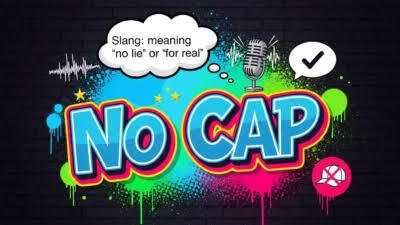
“No cap” means no lie, seriously, genuinely, or for real. People use it when they want to make it clear that they’re being truthful or completely serious.
For example:
“No cap, that was the best burger I’ve ever eaten.”
The speaker is emphasizing that they genuinely enjoyed the burger.
Another example:
“No cap, I was nervous before the interview.”
Here, the speaker is saying that the statement is sincere.
You can put “no cap” at the beginning or end of a sentence.
“No cap, this movie was incredible.”
“This movie was incredible, no cap.”
Both communicate essentially the same idea.
The phrase can also be used humorously. Someone might attach “no cap” to an obviously exaggerated statement simply to make the sentence funnier.
For example:
“I ate 25 burgers yesterday, no cap.”
The phrase doesn’t prove that the statement is true. In some contexts, the humor comes from the obvious exaggeration.
What Does Capping Mean in Slang?
“Capping” is the verb form of cap. When someone is capping, they’re generally lying, exaggerating, or making a claim that sounds unbelievable.
For example:
“Bro, you’re capping.”
This means:
“Bro, you’re lying.”
Another example is:
“Stop capping about your test score.”
This means:
“Stop exaggerating your score.”
However, capping isn’t always used as a serious accusation. Friends often use it playfully when someone tells an exaggerated story.
Imagine this conversation:
Friend 1: “I ran ten miles before breakfast.”
Friend 2: “You’re capping.”
The second friend may simply be joking because the claim sounds unrealistic.
The tone matters. A laughing emoji or playful conversation can make “you’re capping” sound harmless. During a serious argument, however, it may sound much more confrontational.
What Does “That’s Cap” Mean?

“That’s cap” means “that’s a lie,” “that’s exaggerated,” or “I don’t believe you.”
It’s one of the most common ways to use cap slang.
For example:
“I can finish this whole project in ten minutes.”
“That’s cap.”
The listener doesn’t believe the claim.
Another example:
“I never said that.”
“That’s cap. I have the messages.”
Here, the phrase is being used in a more serious disagreement.
On social media, people may simply comment:
“Cap.”
That one word can communicate disbelief without requiring a long response.
You may also see variations such as:
- “That’s straight cap.”
- “Stop the cap.”
- “You’re capping.”
- “Calling cap.”
- “Cap detected.”
- “No cap.”
Although the wording changes, the central idea remains similar: someone doesn’t believe a statement or thinks it has been exaggerated.
Cap vs. No Cap
The easiest way to understand cap slang is to remember that cap and no cap generally work as opposites.
Cap = lie or exaggeration.
No cap = truth or seriousness.
For example:
“That restaurant is the best in the city.”
“Cap.”
The second person doesn’t believe the claim.
Now consider:
“No cap, that restaurant is the best in the city.”
Here, the speaker is emphasizing that they genuinely believe the statement.
| Phrase | Meaning | Example |
| Cap | Lie or exaggeration | “That’s cap.” |
| No cap | No lie; seriously | “No cap, it’s amazing.” |
| Capping | Lying or exaggerating | “You’re capping.” |
| Stop capping | Stop lying | “Stop capping about that.” |
Understanding this difference makes most uses of the expression easy to decode.
Cap Slang Examples in Texting

Texting is one of the most common places to encounter cap slang because messages are short, informal, and conversational.
Here are some examples you can easily understand:
- “You finished already? Cap.”
- “No cap, I’m exhausted.”
- “Bro, you’re capping.”
- “That’s straight cap.”
- “No cap, this food is incredible.”
- “Stop the cap.”
- “You really won that game? No cap?”
- “Cap detected.”
- “I’m calling cap on that story.”
- “No cap, I forgot my keys again.”
- “That’s cap and you know it.”
- “Bro is definitely capping.”
- “No cap, this is my favorite song.”
- “You said you didn’t buy anything. Cap.”
- “No cap, that was hilarious.”
- “I don’t believe you. That’s cap.”
- “Stop capping about your grades.”
- “No cap, I’m telling you the truth.”
- “Cap or facts?”
- “No cap, this was the best part.”
These examples show that cap can express disbelief, skepticism, honesty, humor, and emphasis depending on the situation.
Cap Slang Examples for Social Media
Social media has helped make cap slang recognizable across a wide range of online communities. You’ll often find it in captions, comments, memes, short videos, gaming content, and reaction posts.
Here are some natural examples:
- “This is the best pizza ever, no cap.”
- “Bro really thought we’d believe that. Cap.”
- “No cap, this sunset is perfect.”
- “That outfit is fire, no cap.”
- “You can’t convince me this is real. Cap.”
- “No cap, I watched this five times.”
- “Stop the cap.”
- “That’s straight cap.”
- “No cap, I’m obsessed with this.”
- “Cap meter is going crazy.”
- “No cap, this deserves more attention.”
- “Calling cap on this one.”
- “Bro is capping again.”
- “No cap, that was impressive.”
- “Cap detected immediately.”
- “No cap, this might be my favorite post.”
- “That’s cap and everybody knows it.”
- “Zero cap today.”
- “No cap, this is underrated.”
- “Cap has entered the chat.”
These short expressions work well online because they communicate an immediate reaction without requiring a long explanation.
Where Did Cap Slang Come From?

The modern meaning of cap has a longer history than its recent popularity on TikTok and other social platforms.
Reference sources connect the slang sense of cap with African American English and earlier uses associated with boasting, exaggeration, and lying. Merriam-Webster notes that the expression “no cap” became especially visible through hip-hop culture before spreading more widely into mainstream internet language.
This history is important because many expressions that people now associate with social media existed in particular communities long before they became popular online.
Cap eventually became increasingly visible through music, memes, social media, texting, and online communities. Its modern popularity grew significantly during the late 2010s and early 2020s.
So although people often describe cap as “Gen Z slang,” that description doesn’t tell the entire story. Gen Z and internet users helped spread the term widely, but the expression has deeper cultural and linguistic roots.
Is Cap Gen Z Slang?
Cap is strongly associated with Gen Z slang, internet culture, and social media, but it isn’t exclusively a Gen Z invention.
Younger internet users helped popularize the expression through TikTok, Instagram, memes, gaming, music, and short-form videos. As more people encountered the phrase online, it became recognizable across different age groups.
At the same time, its modern slang history is connected to African American English and hip-hop culture.
Not everyone in Gen Z uses cap regularly. Slang varies according to someone’s age, location, social circle, interests, and online communities.
Some people use “no cap” seriously. Others use it ironically. Some people understand it perfectly but rarely say it.
That’s normal with slang. Language changes constantly, and certain expressions can become popular very quickly before gradually changing or being replaced.
How to Use Cap Slang Correctly
Using cap slang is simple once you understand its main forms.
Use cap when you’re calling something a lie or exaggeration.
Example:
“That’s cap.”
Use capping when describing someone who is lying or exaggerating.
Example:
“You’re capping.”
Use no cap when emphasizing that you’re telling the truth.
Example:
“No cap, this is the hardest test I’ve ever taken.”
You can also say stop capping when you want someone to stop exaggerating.
Example:
“Stop capping about how much you paid.”
Cap slang is best suited to informal situations such as:
- Text messages
- Social media
- Memes
- Gaming chats
- Casual conversations
- Online comments
- Group chats
It usually isn’t appropriate for formal situations such as academic essays, professional reports, business emails, or official documents.
Cap Slang Phrases You May See Online
Once you understand the basic meaning of cap, several related expressions become much easier to recognize.
That’s cap means “I don’t believe you.”
Stop the cap means “stop lying or exaggerating.”
You’re capping means “you’re lying or exaggerating.”
No cap means “seriously” or “I’m telling the truth.”
Cap detected is a humorous way of calling out a questionable statement.
Calling cap means challenging someone’s claim.
Straight cap suggests that something is completely false or exaggerated.
Cap meter is a playful way to describe how unbelievable a statement seems.
You may also see people combine cap slang with emojis. For example:
“That’s cap 🧢”
The baseball-cap emoji can visually reinforce the slang meaning.
Why Do People Say Cap Instead of Lie?
One major reason slang becomes popular is convenience.
Compare these two responses:
“I don’t believe that you’re telling me the truth.”
“Cap.”
The second response is much faster.
Cap is short, flexible, and easy to understand when everyone involved knows the expression. It can also make a conversation feel more casual and playful.
The word can function in several ways:
“That story is cap.”
“You’re capping.”
“Cap!”
This flexibility makes it useful in everyday informal communication.
Slang also creates a shared vocabulary within communities. People who understand the expression can communicate an attitude quickly without needing to explain themselves.
That is one reason short slang terms often spread so effectively through social media.
Is Cap Slang Still Used?

Yes, cap and no cap remain recognizable expressions in casual conversations and online culture.
Their popularity can differ between platforms, age groups, and communities. Some people use the terms naturally, while others use them mainly as jokes or ironic references.
Like other slang terms, their popularity can change over time. Some expressions disappear quickly, while others become part of everyday informal vocabulary.
Cap has remained particularly recognizable because it is simple and flexible. It can be used as a noun, verb, or short reaction.
Even when someone doesn’t personally use the term, they may still understand what another person means when they say “that’s cap.”
Understanding slang is often more important than trying to use every popular expression yourself.
Cap Slang vs. the Traditional Meaning of Cap
The word “cap” has several ordinary meanings in standard English.
A cap can refer to:
- Something worn on the head
- A cover or lid
- A bottle closure
- A maximum limit
- A baseball hat
- A restriction or ceiling
The slang meaning is different.
In slang, cap can mean a lie or exaggeration.
Context usually tells you which meaning is intended.
For example:
“Put the cap on the bottle.”
Here, cap means a physical cover.
“That’s cap.”
Here, cap is slang.
This is common in English. Many words have different meanings depending on the sentence and situation.
Why Does “No Cap” Mean Truth?
The relationship between cap and no cap makes the modern meaning easier to understand.
If cap means a lie or exaggeration, then no cap indicates that there is no lie involved.
In simple terms:
Cap = lie.
No cap = no lie.
For example:
“No cap, I was scared.”
The speaker is emphasizing that they genuinely felt scared.
Another example:
“That was the funniest movie ever, no cap.”
The person is stressing that the opinion is sincere.
“No cap” can appear before or after a statement, and both forms are common in informal communication.
Cap Slang for Parents and Teachers
Parents and teachers may encounter cap slang when reading text messages, social media comments, or conversations between younger people.
The basic meanings are easy to remember:
Cap: Lie or exaggeration.
No cap: Truth or seriousness.
Capping: Lying or exaggerating.
For example:
“That’s cap.”
can be translated as:
“I don’t believe you.”
“No cap, I’m serious.”
can be understood as:
“I’m genuinely serious.”
However, context is important.
A teenager might tell a friend, “You’re capping,” while laughing. That doesn’t necessarily mean they’re making a serious accusation.
It can simply be playful teasing between friends.
Understanding the tone of the conversation helps prevent misunderstandings.
Common Mistakes When Using Cap Slang
One common mistake is assuming that cap always means a serious lie. In casual conversations, it can also mean exaggeration or disbelief.
Another mistake is using “no cap” in every sentence. Too much slang can make your speech sound unnatural.
Some people also assume that everyone understands cap. That’s not necessarily true. Slang differs between age groups, communities, and regions.
Another important point is cultural context. Modern cap slang has connections to African American English and hip-hop culture, so its history is more complex than simply calling it a new social-media phrase.
Finally, remember that cap is informal language. It can work perfectly well in a group chat but may sound inappropriate in a formal business email or academic paper.
Quick Guide to Cap Slang
| Slang Term | Simple Meaning | Example |
| Cap | Lie or exaggeration | “That’s cap.” |
| No cap | No lie; seriously | “No cap, I mean it.” |
| Capping | Lying or exaggerating | “You’re capping.” |
| Stop capping | Stop lying | “Stop capping about that.” |
| That’s cap | I don’t believe you | “You did that? That’s cap.” |
| Cap detected | Calling out a doubtful claim | “Cap detected!” |
| Calling cap | Challenging a claim | “I’m calling cap.” |
| Straight cap | Completely false | “That’s straight cap.” |
Frequently Asked Questions About Cap Slang
What does cap mean in slang?
Cap means a lie, exaggeration, or false claim. Saying “that’s cap” usually means “I don’t believe you.”
What does no cap mean in slang?
No cap means “no lie,” “seriously,” or “for real.” It emphasizes that someone is being truthful.
What does capping mean in slang?
Capping means lying, exaggerating, or making an unbelievable claim. “You’re capping” means “you’re lying.”
What does “that’s cap” mean?
“That’s cap” means “that’s a lie” or “I don’t believe that.” It can be serious or playful depending on the context.
What does “stop capping” mean?
“Stop capping” means “stop lying” or “stop exaggerating.” Friends often use it as casual teasing.
Is cap Gen Z slang?
Cap is strongly associated with Gen Z and internet culture, but its modern usage has older roots in African American English and hip-hop culture.
Where did cap slang originate?
The modern slang sense is connected to African American English, with hip-hop culture helping spread expressions such as “no cap” more widely.
What does cap mean on TikTok?
On TikTok, cap generally means a lie, exaggeration, or unbelievable claim, while “no cap” means someone is being serious or truthful.
How do you use no cap in a sentence?
You can say “No cap, that was amazing” or “That was amazing, no cap” to emphasize that you’re being sincere.
Is cap slang appropriate for formal writing?
Generally, no. Cap is informal slang and is better suited to texting, social media, casual conversations, memes, and online communication.
Conclusion
Understanding cap slang becomes easy once you remember the basic difference: cap usually means a lie or exaggeration, while no cap means truth, sincerity, or seriousness. Capping describes the act of lying or exaggerating, and phrases such as “that’s cap” are used when someone doesn’t believe a statement. Although the expression became highly visible through modern internet culture, its history is connected to African American English and hip-hop culture. Whether you’re trying to understand a TikTok comment, decode a group chat, or learn current online vocabulary, knowing these expressions can make casual conversations much easier to follow. Once you know the basics, there’s really no need to cap about understanding the slang.
