
Introduction
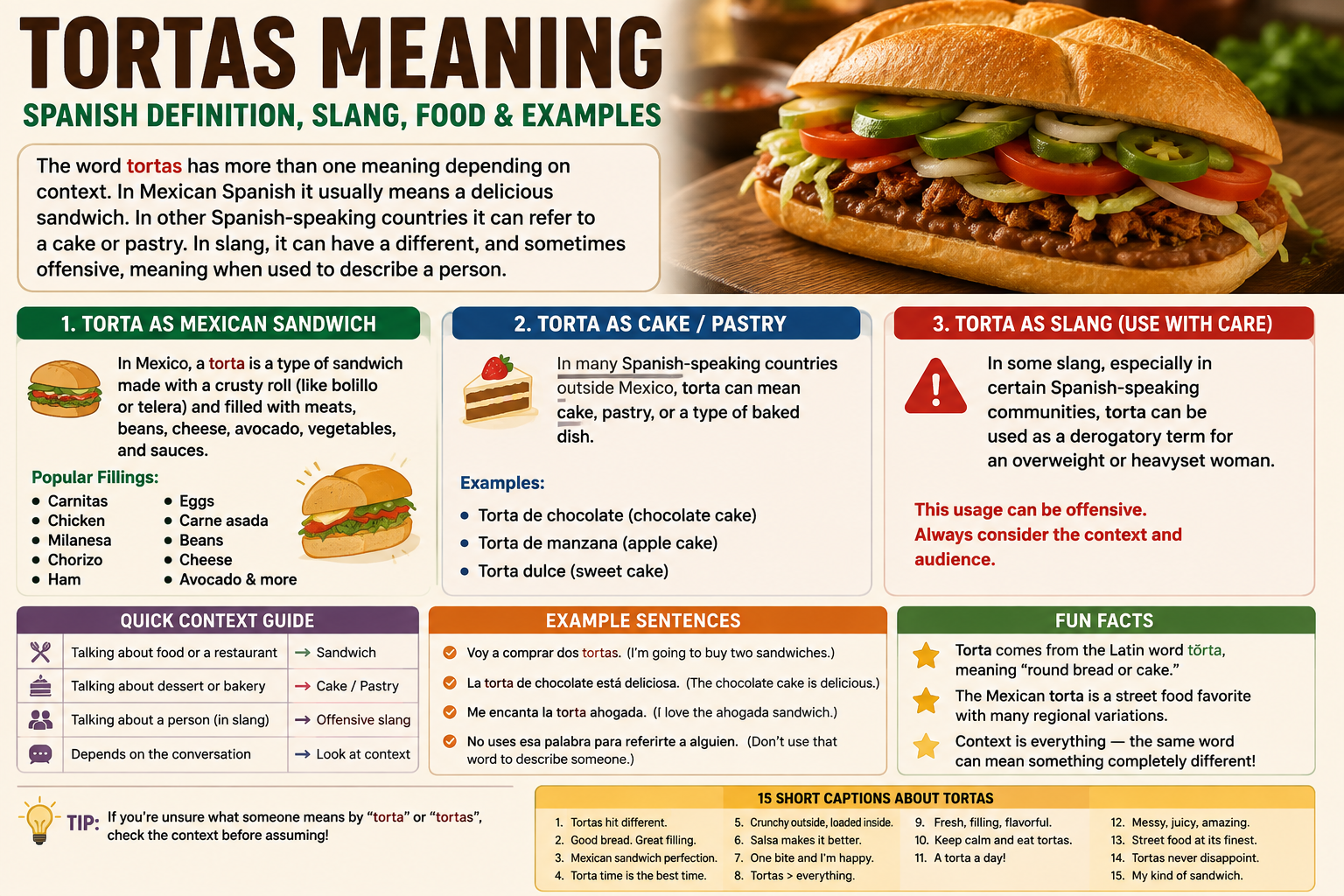
If you have seen the word tortas meaning in a text, social media post, restaurant menu, or Spanish conversation, you may have wondered why the same word seems to describe completely different things. In Mexican Spanish, torta commonly means a filled sandwich made with a roll such as a bolillo or telera. In other Spanish-speaking contexts, torta can refer to a cake or similar baked food. However, some slang uses give the word a completely different and potentially offensive meaning when referring to a person’s body.
This guide explains the different meanings of tortas, including its Spanish definition, Mexican food meaning, slang usage, history, examples, and context. You’ll also learn why the surrounding words matter before deciding what someone means by “torta” or “tortas.”
What Does Torta Mean?
The word torta has more than one meaning, depending on the country and context.
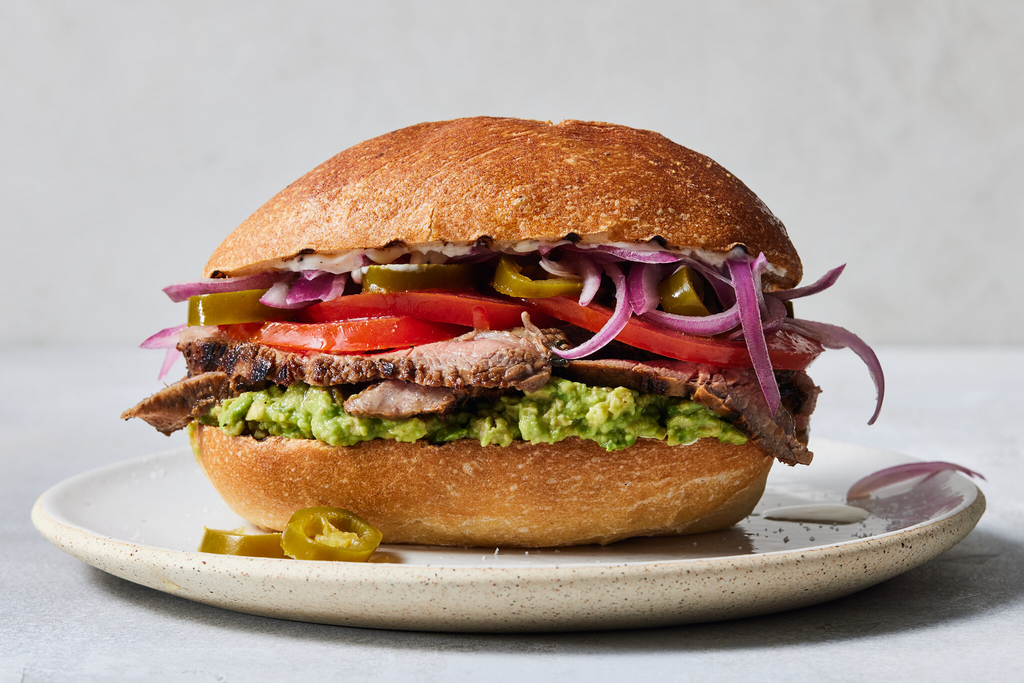
In Mexico, a torta is a type of sandwich. It is commonly made with a crusty or soft roll and filled with meat, cheese, vegetables, sauces, beans, avocado, or other ingredients. Merriam-Webster defines the Mexican food sense as a traditional Mexican sandwich typically made with meat, cheese, and toppings in a split roll.
In Spanish-speaking countries outside Mexico, torta can also mean cake, pastry, or a baked food, depending on the regional variety of Spanish. Wiktionary likewise records tortas simply as the plural of torta, while noting different meanings across languages.
There is also a slang meaning in some English-language and Spanish-speaking communities. Dictionary.com labels one such use as slang and usually disparaging, referring to an overweight or heavyset woman.
So, the meaning cannot be determined from the word alone.
Quick Meaning Guide
| Context | Meaning of Torta |
| Mexican food | A filled sandwich |
| Spanish food in some countries | Cake, pastry, or baked dish |
| Standard Spanish | Meaning varies by region |
| Slang | Can refer disparagingly to a heavyset woman |
| “Tortas” | Plural form of torta |
| Restaurant menu | Usually refers to food |
| Online slang | Meaning depends heavily on context |
Tortas Meaning in Mexican Spanish

One of the most common meanings of tortas is the Mexican sandwich.
Unlike a typical American sandwich made from two slices of bread, a Mexican torta usually uses a whole roll that is sliced open and filled. Common breads include bolillo, telera, and regional variations such as birote.
The filling can vary dramatically. A torta may contain carnitas, chicken, beef, ham, chorizo, eggs, cheese, avocado, beans, tomato, onion, lettuce, jalapeños, or sauces.
This is why ordering a torta in Mexico is not simply ordering “a sandwich.” The word describes a broad and flexible food category with many regional versions.
Common Torta Fillings
Popular fillings include:
- Carnitas
- Al pastor
- Chicken
- Carne asada
- Chorizo
- Ham
- Eggs
- Cheese
- Beans
- Avocado
- Jalapeños
- Tomato
- Onion
- Lettuce
- Chipotle sauce
The exact combination depends on the restaurant and region.
15 Common Torta Food Descriptions
- A crispy carnitas torta with avocado.
- A spicy chicken torta with jalapeños.
- A breakfast torta filled with eggs and cheese.
- A beef torta with fresh vegetables.
- A ham and cheese torta.
- A chorizo torta with beans and salsa.
- A grilled torta with melted cheese.
- A classic Mexican torta with avocado.
- A hot torta served with spicy sauce.
- A loaded torta with several toppings.
- A simple torta with beans and meat.
- A toasted torta with crispy bread.
- A vegetarian torta with avocado and vegetables.
- A carnitas torta with pickled jalapeños.
- A regional torta made with local ingredients.
What Is a Mexican Torta?
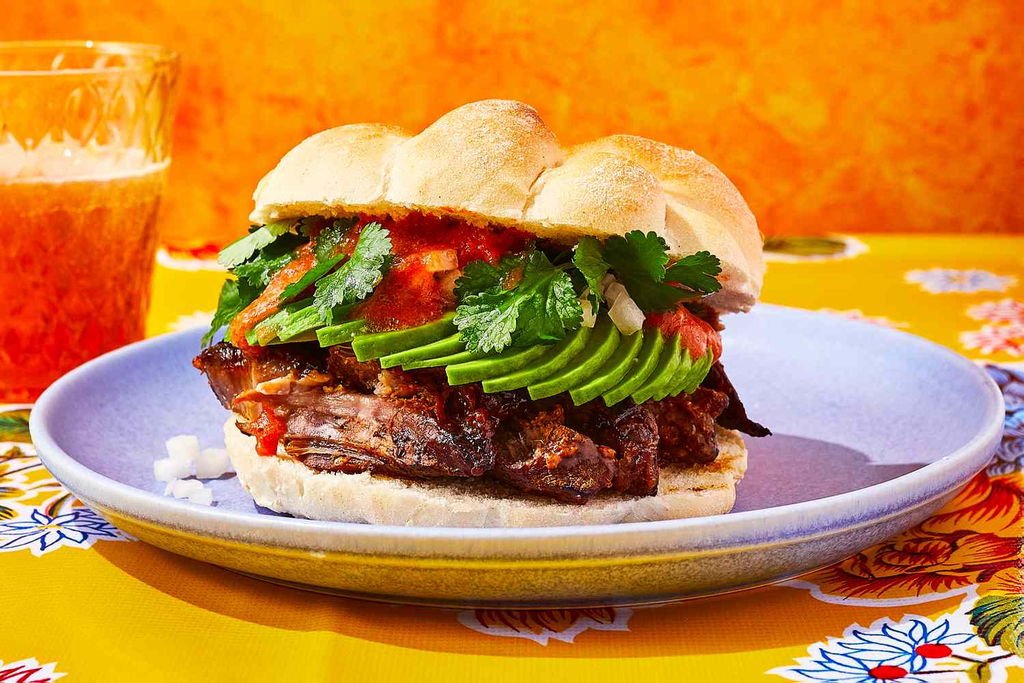
A Mexican torta is essentially a filled sandwich built around Mexican ingredients and flavors.
Food Network describes the Mexican torta as a sandwich made by slicing a roll and filling it with meats and other ingredients, often accompanied by bold sauces and garnishes.
The bread is an important part of the experience. A bolillo is generally crusty and oval-shaped, while a telera is softer and flatter. Regional traditions can use different breads.
Martha Stewart’s overview also describes a torta as a Mexican sandwich made with a roll rather than sliced bread, noting that many versions use ingredients such as refried beans, jalapeños, and flavorful meat fillings.
Torta vs. Regular Sandwich
A torta can look like a regular sandwich, but its ingredients and preparation give it a distinctly Mexican identity.
| Feature | Torta | Regular Sandwich |
| Bread | Bolillo, telera, birote, etc. | Often sliced bread |
| Fillings | Mexican meats, beans, sauces | Highly variable |
| Flavor | Often bold and spicy | Depends on style |
| Preparation | Can be toasted or grilled | May be served cold or hot |
| Regional variety | Very high | Varies by cuisine |
15 Short Torta Food Captions
- “Big sandwich energy, Mexican style.”
- “A torta worth every bite.”
- “Crunchy bread, bold filling, happy mood.”
- “Today’s comfort food has a torta.”
- “One torta, zero regrets.”
- “Loaded, toasted, and ready.”
- “A Mexican classic in every bite.”
- “Torta time is always a good time.”
- “When tacos need a sandwich break.”
- “Fresh toppings make everything better.”
- “Pass the salsa and the torta.”
- “A serious sandwich for a serious appetite.”
- “Crispy bread, juicy filling.”
- “Nothing beats a freshly made torta.”
- “Lunch just got much more delicious.”
What Does Torta Mean in Spanish?
The Spanish word torta does not have one universal meaning across every Spanish-speaking country.
This is an important language point because Spanish vocabulary can change considerably by region.
In Mexico, torta commonly refers to the sandwich discussed above. In other places, torta may refer to a cake, pie-like preparation, flat bread, or another baked food. Dictionary.com traces the Mexican sandwich meaning separately from the older Spanish meaning associated with cake or pastry.
This means someone from one Spanish-speaking country may hear “torta” and immediately think of dessert, while someone from Mexico may think of a sandwich.
Regional Context Matters
When translating Spanish food vocabulary, it is better to ask where the speaker is from rather than assuming every word has exactly the same meaning everywhere.
For example:
“Vamos por unas tortas.”
In a Mexican context, this would likely refer to getting sandwiches.
Meanwhile, in another regional context, a conversation about a birthday celebration could make torta refer to a cake or baked dessert.
15 Context Clues for Understanding Torta
- A restaurant menu usually suggests the sandwich meaning.
- Bread-related words suggest the Mexican food meaning.
- Meat fillings suggest the sandwich meaning.
- A birthday setting may suggest cake in some regions.
- A Mexican speaker may use it for a sandwich.
- A bakery context can change the meaning.
- A Spanish recipe may reveal the intended definition.
- “Una torta” means one torta.
- “Dos tortas” means two tortas.
- “Las tortas” means the tortas.
- Social media may use slang instead.
- Body-related language can indicate slang.
- Insults can signal a derogatory meaning.
- Location can help identify the intended meaning.
- The surrounding sentence is often the best clue.
Tortas Meaning as Slang
The slang use of tortas is very different from the food meaning.
Dictionary.com lists torta as a slang term that can be used disparagingly for an overweight or heavyset woman.
This usage should not be confused with the ordinary Mexican food meaning.
If someone says:
“I ordered two tortas.”
They are almost certainly talking about food if the conversation involves a restaurant.
But if someone uses “torta” to describe a person, especially in a mocking or insulting way, the slang meaning may be intended.
Because this use can be body-shaming or offensive, it is better not to casually use it to describe someone.
Why Context Is Important
A single word can move from harmless to insulting depending on what it describes.
For example:
“The tortas at this restaurant are amazing.”
This is clearly food-related.
But:
“He called her a torta.”
This may refer to the slang meaning and can carry a derogatory tone.
The safest approach is to consider the speaker, audience, language community, and surrounding conversation.
15 Examples Showing Different Contexts
- “Let’s get tortas for lunch.” — Food.
- “This torta has amazing carnitas.” — Food.
- “The restaurant sells huge tortas.” — Food.
- “I learned how to make a torta.” — Food.
- “She ordered a chicken torta.” — Food.
- “My favorite Mexican food is tortas.” — Food.
- “The menu has five different tortas.” — Food.
- “What kind of torta do you want?” — Food.
- “The tortas came with salsa.” — Food.
- “He used torta as an insult.” — Slang.
- “That slang term can be offensive.” — Slang.
- “The meaning changed because of context.” — Language.
- “Don’t assume every torta reference is slang.” — Context.
- “In Mexico, torta usually means a sandwich.” — Regional usage.
- “Check the surrounding words before translating it.” — Language advice.
Is Torta a Bad Word?
Torta is not inherently a bad word.
In Mexican Spanish, it is an ordinary food word. Saying that you want a torta for lunch is completely normal.
The problem occurs when the word is used as slang to describe a person. Some slang dictionaries and explainers record body-related uses that can be insulting or disrespectful. Dictionary.com specifically marks the slang definition as usually disparaging.
Therefore, context matters more than the word itself.
When Torta Is Completely Normal
The word is generally harmless when discussing:
- Mexican food
- Sandwiches
- Restaurants
- Recipes
- Cooking
- Street food
- Regional cuisine
- Spanish vocabulary
When You Should Be Careful
Be cautious when:
- Someone uses it to describe a person’s body.
- The conversation is mocking or insulting.
- You are unfamiliar with the speaker’s regional slang.
- The term is being used toward someone who may find it offensive.
- You are repeating slang without understanding its local meaning.
Torta Meaning in Texting and Social Media
Online, tortas can refer to food or slang. Social media makes context especially important because people often mix Spanish and English, use regional expressions, or repeat slang they saw elsewhere.
A food post might say:
“Best tortas in town!”
That obviously refers to sandwiches.
A meme about a person’s appearance could use the word differently.
Because online slang is often exaggerated, humorous, or community-specific, you should not assume every social media use represents standard Spanish.
15 Possible Social Media Uses
- “Tortas for lunch!”
- “Craving a good torta.”
- “Who knows the best tortas?”
- “Homemade tortas tonight.”
- “This torta is massive.”
- “Mexican food never disappoints.”
- “Torta and salsa kind of day.”
- “Found my new favorite tortería.”
- “That sandwich was incredible.”
- “Torta cravings are real.”
- “Trying a new torta recipe.”
- “Street-food perfection.”
- “A torta makes lunch better.”
- “Extra avocado on my torta.”
- “Weekend torta run.”
These examples show why social media context should be considered before assuming slang.
Torta vs. Tortilla: Are They the Same?
No. Torta and tortilla are different foods.
A torta, in the Mexican sense, is a sandwich made with a bread roll.
A tortilla is a thin, round flatbread commonly made from corn or wheat and used for foods such as tacos, quesadillas, and enchiladas.
The words have related historical roots in Spanish and Latin vocabulary, but they describe different foods in modern Mexican cuisine.
Quick Comparison
| Torta | Tortilla |
| Sandwich | Flatbread |
| Uses a roll | Uses a thin flat round |
| Often filled with meat | Used to wrap foods |
| Commonly served as a sandwich | Commonly used for tacos |
| Bolillo/telera may be used | Corn/wheat tortilla |
Understanding this difference prevents a common vocabulary mistake.
The History and Origin of Torta
The word has a long history that predates the modern Mexican sandwich.
Merriam-Webster traces the Mexican sandwich term through Mexican Spanish and Spanish, ultimately connecting it with Late Latin tōrta, associated with a round loaf.
The Mexican sandwich developed into a distinctive food tradition. Food Network notes its association with Puebla and discusses the influence of French-style bread during the historical period of French presence in the region.
Today, tortas are found throughout Mexico, with regional variations that reflect local ingredients and culinary traditions.
Regional Torta Traditions
Different places have developed their own versions, including famous preparations such as the torta ahogada from Jalisco.
A torta ahogada is especially recognizable because the sandwich is immersed or heavily covered in salsa. Modern food reporting continues to highlight its connection to Guadalajara and its distinctive bread and sauce.
This regional diversity is one reason the word torta can represent much more than a single recipe.
Popular Types of Mexican Tortas
There is no single universal torta recipe. The ingredients depend on the region, restaurant, and personal preference.
Torta Ahogada
A famous specialty associated with Jalisco, the torta ahogada is traditionally made with a sturdy roll and a flavorful chile-based sauce. It is known for being messy, spicy, and deeply satisfying.
Torta de Carnitas
This version uses tender pork carnitas as its primary filling. Avocado, onion, salsa, and other toppings can be added.
Torta de Milanesa
A breaded meat cutlet makes this version especially filling. It may be paired with avocado, lettuce, tomato, cheese, and sauces.
Breakfast Torta
Eggs, cheese, beans, avocado, and meat can turn a torta into a substantial breakfast.
Vegetarian Torta
Vegetarian versions can feature beans, avocado, cheese, roasted vegetables, peppers, mushrooms, or other ingredients.
15 Fun Torta Captions
- “Torta today, problems tomorrow.”
- “Keep calm and eat a torta.”
- “My love language is extra salsa.”
- “Tortas make everything better.”
- “Powered by bread and bold flavors.”
- “Life is better with a loaded torta.”
- “A sandwich with serious Mexican flavor.”
- “No such thing as too much avocado.”
- “Torta first, questions later.”
- “Currently thinking about tortas.”
- “Good bread, great filling, perfect day.”
- “One bite and I’m officially happy.”
- “Salsa makes the story better.”
- “Torta cravings have entered the chat.”
- “Mexican sandwich magic on a plate.”
FAQs About Tortas Meaning
What does tortas mean in Spanish?
Tortas is the plural of torta. Depending on the region, it can refer to Mexican sandwiches or cakes and other baked foods.
What does torta mean in Mexican Spanish?
In Mexican Spanish, torta commonly means a filled sandwich served on bread such as a bolillo or telera.
What does torta mean in slang?
In some slang contexts, torta can be a disparaging term for a heavyset or overweight woman. This usage can be offensive and should be treated carefully.
Is torta a bad word?
No. The ordinary Mexican food meaning is completely normal; the word becomes potentially offensive when used as derogatory slang toward a person.
What is the plural of torta?
The standard Spanish plural is tortas. In English, the plural is also commonly written as “tortas” when discussing Mexican sandwiches.
Does torta mean cake in Spanish?
In some Spanish-speaking regions, torta can mean cake or a similar baked food. Regional usage differs, so context is important.
What is a Mexican torta?
A Mexican torta is a sandwich made with a bread roll and fillings such as meat, cheese, beans, avocado, vegetables, sauces, and peppers.
Is torta the same as a taco?
No. A torta is a sandwich made with a bread roll, while a taco normally uses a tortilla to hold its filling.
What is a torta ahogada?
A torta ahogada is a famous Mexican sandwich associated with Jalisco and Guadalajara that is served with a substantial amount of sauce.
Why does torta have different meanings?
Torta developed different meanings across Spanish-speaking regions and later acquired additional slang uses, so geography and context strongly influence interpretation.
Conclusion
The tortas meaning depends almost entirely on context. In Mexican Spanish, the word most commonly refers to delicious filled sandwiches made with rolls such as bolillos or teleras. In other Spanish-speaking regions, torta can refer to cake or another baked food. The word can also appear as slang with a derogatory body-related meaning, so using it to describe a person requires caution. Understanding these differences makes it much easier to interpret conversations, menus, recipes, texts, and social media posts correctly. When in doubt, look at the surrounding words, the speaker’s regional background, and whether the conversation is about food or a person.
